|
|
The First World Time-Bank
an article by Pilar Rocio, Escola Cultura de Pau, Barcelona
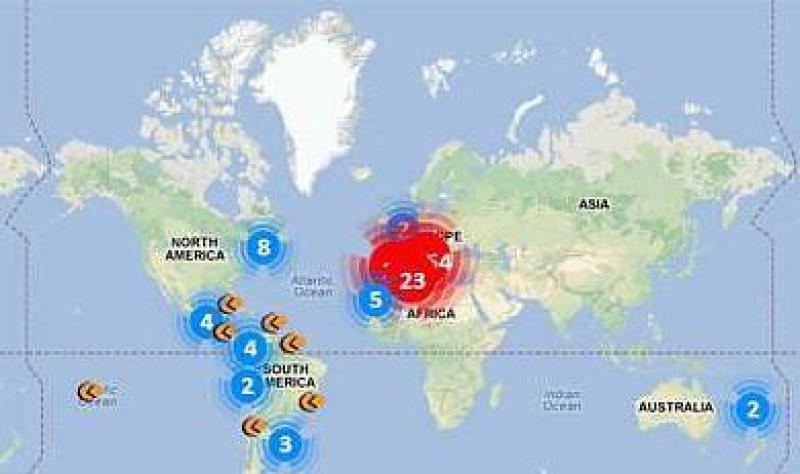
The first world-wide time-bank, called Cronobank, has been established to link up all of the many local time-banks that allow the exchange of goods, services and accommodation without use of money.

click on photo to enlarge
This nonprofit organization manages an alternative exchange that is gaining more and more users worldwide, fostering social relationships and equality.
The creation of time-banks has emerged as a way to buy and sell very simply based on respect and access for everyone, with the premise of "one hour for one hour." This eliminates social exclusion and allows all users to satisfy needs through exchange of work in the same amount of time.
"All without money, but with more friends in the world" could be the motto of this online time bank that allows people around the world to exchange without money, without borders or boundaries of language services, goods, knowledge and even accommodation. The only currency is time.
How does it work? Very simple; one hour of any service and/or knowledge is valued equally for everyone and everywhere. This encourages reciprocity and exchange, with the only restriction that among users of the time-bank, there should never be any exchange of money. Users must open an account in the time-market where demands and offers are published., The main tool is a location map of the other users and a word search engine. After each transaction an assessment of the other's behavior is done, favoring relationships over profits.
The smallest exchange unit is one minute. When any participant adds time providing goods, services, knowledge and/or accommodation, it is then used to acquire what others offer in exchange. This has the advantage that it is not speculative; participants before the exchange, have the possibility of agreements in which both sides feel rewarded for their time.
Understanding how to evaluate time is very important.
An example: Laura cares for Marc´s grandmother for two hours and gets two hours of time in her account. With those two hours she asks Willy to do home gardening, so Willy takes two hours used to purchase something, and so on ...
Every hour is unique and irreplaceable. As of today, time banks are operating in many countries, and they can fulfill needs, as well as encourage cooperation and equality of the participants.
(Click here for a Spanish version of this article)
|


|
DISCUSSION
Question(s) related to this article:
How can we get to a sustainable, peaceful economy?,

|
|


 by program area