|
|
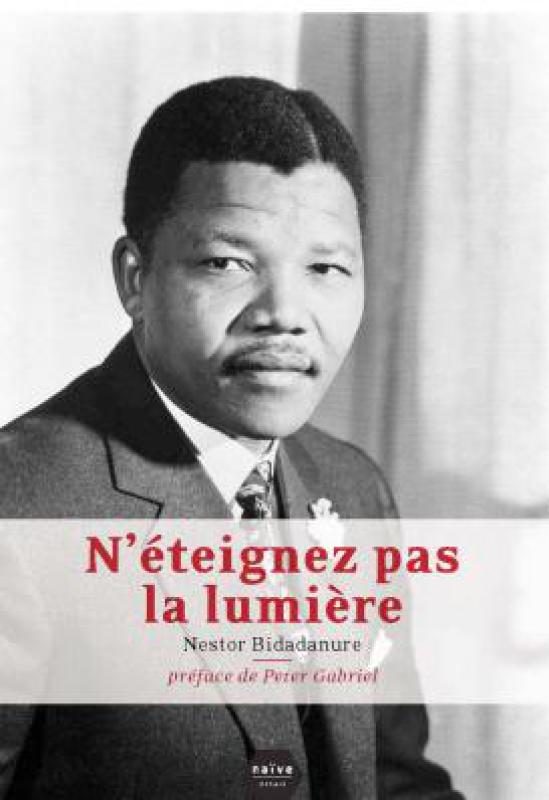
N'eteignez pas la lumiere - book review
an article by <Sodis, Éditions Gallimard
« C’est au cours des années 30, dans une
organisation pronazie dénommée Ossewa Brandwag (la
sentinelle des chars à bœuf) que se sont
rencontrés les trois précurseurs de l’apartheid.
John Vorster, Hendrik Frensch Verwoerd et Daniel
Malan partageaient deux rêves sinistres : prendre
le pouvoir pour se venger de la domination
britannique sur les Afrikaners et construire un
système racial hiérarchisé dans lequel les Noirs
seraient encore plus marginalisés. Pour atteindre
ces objectifs, ces hommes avaient besoin de deux
leviers essentiels : une vision du monde partagée
– la doctrine – ainsi que l’instrument de
mobilisation de la masse des Blancs – le parti.
L’apartheid sera donc la réponse doctrinale et le
Parti National l’instrument de propagande,
d’organisation et de conquête du pouvoir. Mais
que signifie donc l’apartheid ? A quoi rime sa
doctrine ? »

click on photo to enlarge
N’éteignez pas la lumière est un livre de
réflexion sur la pensée de Nelson Mandela. Il
analyse les conditions d’émergence de sa
personnalité politique ainsi que son héritage pour
les combats futurs. La lumière symbolise la
culture au sens humaniste et progressiste du
terme. Elle jaillit de l’éducation
traditionnelle, de la philosophie africaine
d’Ubuntu, de la volonté d’apprendre ainsi que des
conclusions que le héros de la lutte contre
l’apartheid tire de chaque combat politique mené.
Mandela est convaincu que chaque être humain peut
s’améliorer et qu’une certaine éducation élève
l’homme, le rend plus libre. Pour survivre aux
difficiles conditions d’emprisonnement, Mandela et
ses compagnons mettent en place une stratégie de
résistance résolue. Ni la terreur ni les
conditions carcérales infrahumaines conçues pour
briser le moral des prisonniers n’arriveront à
atteindre la détermination de vaincre des
combattants de la liberté.
L’auteur, Nestor Bidadanure, est journaliste,
spécialiste de la résolution des conflits. Il
collabore à la revue Afrique-Asie. Il est l’auteur
d’un mémoire Cultures de paix face aux populismes
et de Mémoires d’avenir aux éditions naïve (2011).
( Cliquez ici pour une version anglaise)
|


|
DISCUSSION
Question(s) related to this article:
What is the legacy of Nelson Mandela for us today?,
* * * * *
LATEST READER COMMENT:
ON MANDELA'S LASTING LEGACY
In death, as in his life, Nelson Mandela has captured the imagination of the world. Mourning mixed with celebration has electrified crowds all over South Africa and elsewhere. His life’s achievements and his lasting legacy are the topics of discussions. He has been described as a great warrior, a great liberator, the last giant in the fight against colonialism, forgiver, peace maker, and in many other ways.
All this week, Mandela’s lasting legacy has been on my mind. We tend to capture the legacies of great men and women in a word or two. A scientist becomes famous for an important discovery, a writer for a famous book, a musician for a great composition, and so on.
People like Mandela fall in a different category. He is in the category of Mahatma Gandhi and Dr. Martin Luther King. They are known for their fights on behalf of oppressed people; they are known for their personal sacrifice, and for their moral authority. If we are to look for words to associate with these men, it will be ?nonviolence? for Gandhi and ?love? (beloved community) for Dr. King. But what about Mandela- how will we describe his legacy?
What were the important transformational changes in Mandela?s life?
Mandela the great warrior: Mandela has been described as a great warrior, but he was no ordinary warrior. All legendary warriors, mythical or real, are known for the destruction of their enemies. Mandela was different; he did not seek annihilation of his enemy; he transformed his enemy into his collaborator.
Mandela the resilient sufferer: I know of no other person living or dead who was forcefully made to disappear from the scene for this long (incarceration for 27 years) and who survived and made his triumphatic return. Gandhi said there is no other way to show your love for the suffering of your loved ones than to suffer yourself with them, for them. Mandela suffered the longest because his work was the hardest.
Mandela the great liberator: Colonial rulers are known for their ruthless treatment and putting down of citizens but South Africa was not a typical colonial rule. The rulers were Afrikaners, citizen of South Africa. I know of no other country, outside of the United States, where the blacks were so harshly treated by another segment of their own country. It was a true liberation. Thanks to Mandela, sad songs of seeking freedom through death were transformed into freedom in life.
Mandela the magnanimous forgiver: Gandhi?s nonviolence is a complete philosophy of life and it includes love of your enemy and forgiveness. Nonviolence had to be tested to show that it works and that it?s not just a philosophy. Dr. King tested nonviolence with his own suffering and love for his people. His passion for his ?beloved community? became the brand of his civil rights struggle for which he paid with his own life. As Gandhi said, the only two places of non-action for such fighters are prison or death. Mandela went to prison, suffered longer, and tested his resolve to forgive his ?enemy?. We can only imagine the blood bath had he not done that.
Mandela the peace maker: Gandhi, Dr. King and Mandela, together, constitute a shining trinity of peace and their contributions, respectively, nonviolence, love, and forgiveness provide a prescription for peace if the humankind needs to survive. Truth and Reconciliation will remain one of Mandela?s brilliant and innovative contributions for healing wounds between warring people, warring nations. Gandhi, King and Mandela, all tested nonviolence in their own way and they all came out with the same result: The path of peace and liberation goes through love, suffering, and forgiveness.
Mandela the spiritual father: We go through life with two sets of parents. Our own parents, of course, who brought us in this world, whom we owe our life, body and brain, whom we remain eternally grateful for their sacrifice and care to help us grow and to teach us how to live.
There are another set of parents, for a lack of a better word we can call them our ?spiritual parents?. These are men and women whom the whole humanity owes gratitude because it is their discoveries, contributions and, teachings that we like fill our brain with, they make us human- kinder, gentler, and humane.
We call ourselves human because we made a pledge with destiny that we will become humane. It has been a long and arduous journey. With his love, suffering and forgiveness, Mandela has brought us further on the path and has warned we still have a long way to go.
Gandhi-King-Mandela, or Mohan, Martin and Matiba, are angels of peace. We are their descendents, the keepers of their dreams.
Rama Singh, is a professor in the department of biology, and member, Coordinating Council, Centre for Peace Studies, McMaster University.
This appreciation was originally published in the Hamilton Spectator in Canada.

|
|


 by program area