|
|
Where Have You Hidden My New Crescent Moon?
an article by Tairah Fidous
FOR someone who is not familiar with Kashmir, the short film
Where Have You Hidden My New Crescent Moon? is a story packed
with pathos, but soon to be forgotten once a new day has dawned.
However, for countless Kashmiris, its a story that they have to live
with all their life — of hoping against hope to find their missing
children and often dying without ever finding them. 
A scene from the film
click on photo to enlarge
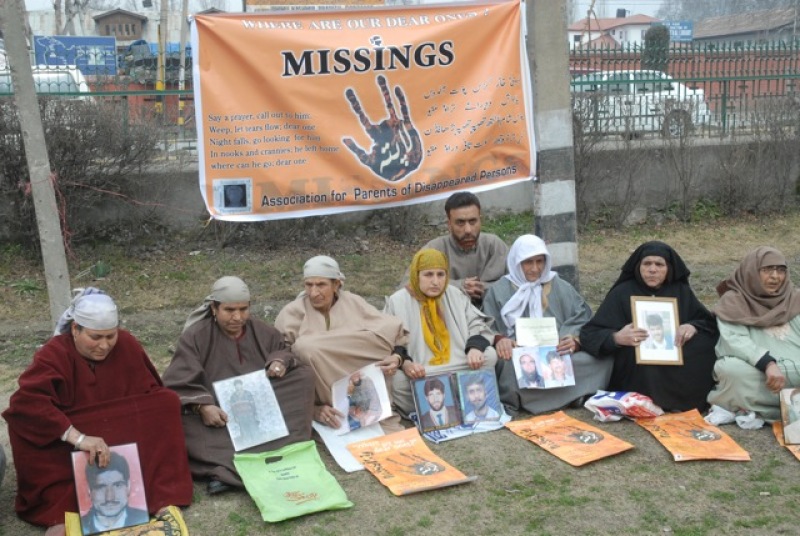
The film by Kashmiri Film Maker, Iffat Fatima, is an attempt to draw
attention to forced disappearances in Kashmir. The film presents
one such story, of an old mother called Mughal Masi who spent the
last 20 years of her life waiting for her sons return before dying in
vain on October 26, 2009.
“ I did not have any intention to make a film on Mughal Masi. I
have been working on the ongoing project Half Widows in
collaboration with the Association of the Parents of Disappeared
Persons in Kashmir ( APDP) since 2006. I had gone to see Mughal
Masi on April 1, 2009, because she was sick. Four hours of
conversation with her on that day is what became Where Have
You Hidden My New Crescent Moon? ” shares Fatima.
Mughal Masi lived in Habba Kadal, Srinagar in Indian occupied
Kashmir. On September 1, 1990, her only son Nazir Ahmed Teli,
a teacher, disappeared and was never found again. Fatima's film
is a tribute to Mughal Masi and her quest for justice. The film not
only shows the agony and pain of the families who have been
waiting for their loved ones to return back since last two
decades, but it also shows how these families especially women
protest against the human rights violations in Kashmir.
In the film, Mughal Masi does not accuse anyone. What she says is,
"some hawks came and swapped my son." She uses poetic language
and metaphors to protest and tell her story, not violence.”
|


|
DISCUSSION
Question(s) related to this article:
Films for human rights
Thematic forum(s) in which this article is being discussed:
HUMAN RIGHTS - DROITS DE L'HOMME
Latest reader comment:
this film shows how films can be used to highlight human rights violations and social injustices.

|
|
|
This report was posted on 05/01/2011.
If you wish to start a new discussion topic on this article, please copy the title of this article which is Where Have You Hidden My New Crescent Moon? and its number which is 464 and enter this information along with your discussion question and an introductory response to the question here.

A few stories are retained on the main listings if they are considered
by readers to be a priority. If you have not already done so, please
take the time to check a box below: should this article be considered as
a priority?
|



 by program area