|
|
Video games and law of war: International Committee of the Red Cross
an article by International Committee of the Red Cross
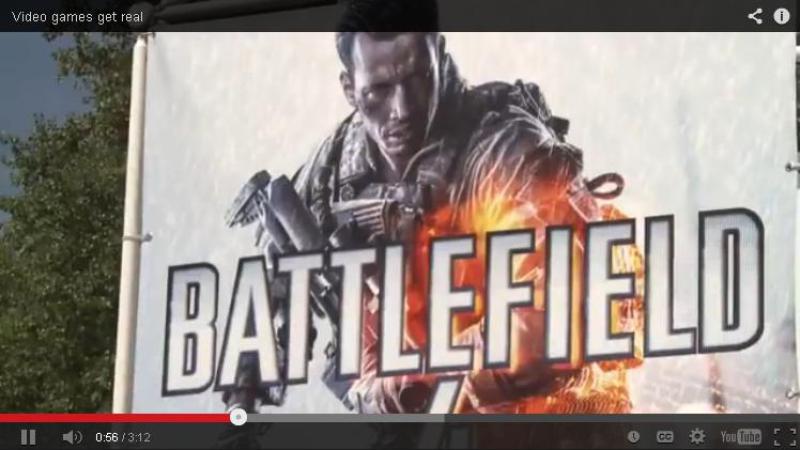
Video: Video games and law of war
War packaged for recreational consumption enthrals
children and adults worldwide. For the military,
these "electronic first-person shooter games"
offer a great resource to adapt for training. The
ICRC has started working with video game
developers, so that video game players face the
same dilemmas as real soldiers.
click on photo to enlarge
International humanitarian law and video games:
questions and answers
The ICRC believes there is a place for
international humanitarian law (the law of armed
conflict) in video games. The International Red
Cross and Red Crescent Movement has publicly
stated its interest in the implications of video
games that simulate real-war situations and the
opportunities such games present for spreading
knowledge of the law of armed conflict. The
rules on the use of force in armed conflict should
be applied to video games that portray realistic
battlefield scenes, in the same way that the laws
of physics are applied.
What exactly does the ICRC want to see in these
video games?
The ICRC is suggesting that as in real life, these
games should include virtual consequences for
people's actions and decisions. Gamers should be
rewarded for respecting the law of armed conflict
and there should be virtual penalties for serious
violations of the law of armed conflict, in other
words war crimes. This already exists in several
conflict simulation games. Game scenarios should
not reward players for actions that in real life
would be considered war crimes.
The ICRC is concerned that certain game scenarios
could lead to a trivialization of serious
violations of the law of armed conflict. The fear
is that eventually such illegal acts will be
perceived as acceptable behaviour. However the
ICRC is not involved in the debate about the level
of violence in video games.
What are some of the violations of the law of
armed conflict that are of particular concern?
The ICRC is concerned about scenarios that, for
instance, depict the use of torture, particularly
in interrogation, deliberate attacks on civilians,
the killing of prisoners or the wounded, attacks
on medical personnel, facilities, and transport
such as ambulances, or that anyone on the
battlefield can be killed.
Should video games be prohibited from depicting
such acts?
Sanitizing video games of such acts is not
realistic. Violations occur on real battlefields
and can therefore be included in video games. The
ICRC believes it is useful for players to learn
from rewards and punishments incorporated into the
game, about what is acceptable and what is
prohibited in war.
[Note: Thank you to Cecile Barbeito Thonon, the CPNN reporter for this article]
(This article is continued in the discussionboard)
( Click here for the French version of this article)
|


|
DISCUSSION
Question(s) related to this article:
What should be done about violent video games?,
* * * * *
LATEST READER COMMENT:
(The following is continued from the main article listed above.)
Does this also apply to more fantasy oriented war games?
No, the ICRC is talking about video games that simulate real-war situations. It is not suggesting that this apply to games that portray more fictional scenarios such as medieval fantasy or futuristic wars in outer space.
A few media reported that certain virtual acts performed by characters in video games could amount to serious violations of the law of armed conflict. Is this correct?
No. Serious violations of the laws of war can only be committed in real-life. A person cannot commit a war crime simply by playing a video game.
Why is the ICRC interested in video games that simulate real warfare?
The ICRC is interested in issues relating to video games simulating warfare because players can face choices just like on a real battlefield.
States are obliged to respect and ensure respect for the law of armed conflict and to make its rules known as widely as possible at all times. In real life, armed forces are subject to the laws of armed conflict. Video games simulating the experience of armed forces therefore have the potential to raise awareness of the rules that those forces must comply with whenever they engage in armed conflict – this is one of the things that interests the ICRC. In fact some video games already take into account how real-life military personnel are trained to behave in conflict situations.
Part of the ICRC's mandate, conferred on it by States, is to promote respect for international humanitarian law ? also known as the law of armed conflict ? and universal humanitarian principles. Given this mandate and the ICRC's long history and expertise in matters relating to armed conflict, the development of these games is clearly of interest to the organization.
Does the ICRC work with video-game developers to make sure the law of armed conflict is accurately reflected in certain games?
The ICRC is working with video game developers to help them accurately incorporate the laws of armed conflict in their games. It welcomes the fact that certain video games on war-related themes already take the law of armed conflict into account. The ICRC has expressed its readiness to engage in a dialogue with the video game industry in order to explore the place of humanitarian rules in games.
Won't this make the games preachy or boring?
Our intention is not to spoil player's enjoyment by for example, interrupting the game with pop-up messages listing legal provisions or lecturing gamers on the law of armed conflict. We would like to see the law of armed conflict integrated into the games so that players have a realistic experience and deal first hand with the dilemmas facing real combatants on real battlefields. The strong sales of new releases that have done this prove that integrating the law of armed conflict does not undermine the commercial success of the games.
Shouldn't the ICRC be primarily concerned with real-life warfare?
Absolutely, and real-life armed conflict and its humanitarian consequences are in fact its primary concern.
With its roughly 12,000 staff, the ICRC carries out humanitarian activities in situations of armed violence all over the world. It is often the first organization to arrive on the scene when armed conflict erupts and to attend to the needs of people detained, displaced or otherwise affected. It also strives to bring about improved compliance with the law of armed conflict and encourage respect for the dignity of people affected by war.
With their ever increasing popularity, video games can have a strong influence on what young people, future recruits and societies in general perceive as acceptable or prohibited in situations of armed conflict. That is why the ICRC also follows developments in the industry, particularly with games simulating real-life armed conflict.
Why does the ICRC show interest in video games but not, for example, in books, comics, TV series or films?
The ICRC is occasionally approached by filmmakers or authors who want to portray its activities in past or present armed conflicts. It has thus had contacts with various segments of the entertainment world beyond the developers of video games. But video games represent an unprecedented novelty. Unlike traditional media such as movies, they require players to make active decisions, for example to use or refrain from using force.
Again, the ICRC is not interested in all video games ? only in those simulating real-life armed conflict. Some of these games are being designed and produced by the same companies developing simulated battlefields for the training of armed forces where the law of armed conflict are a necessary ingredient.
What was said on this subject at the 31st International Conference of the Red Cross and Red Crescent?
The 31st International Conference met in November 2011 in Geneva with the overall objective of strengthening international humanitarian law and humanitarian action. In a side event, participants also explored the role that the law of armed conflict plays, or does not play, in simulations of war. They considered various ways in which the rules applicable in armed conflict could feature in simulations. The side event was an informal discussion; no resolution or plan of action was adopted.

|
|



 by program area